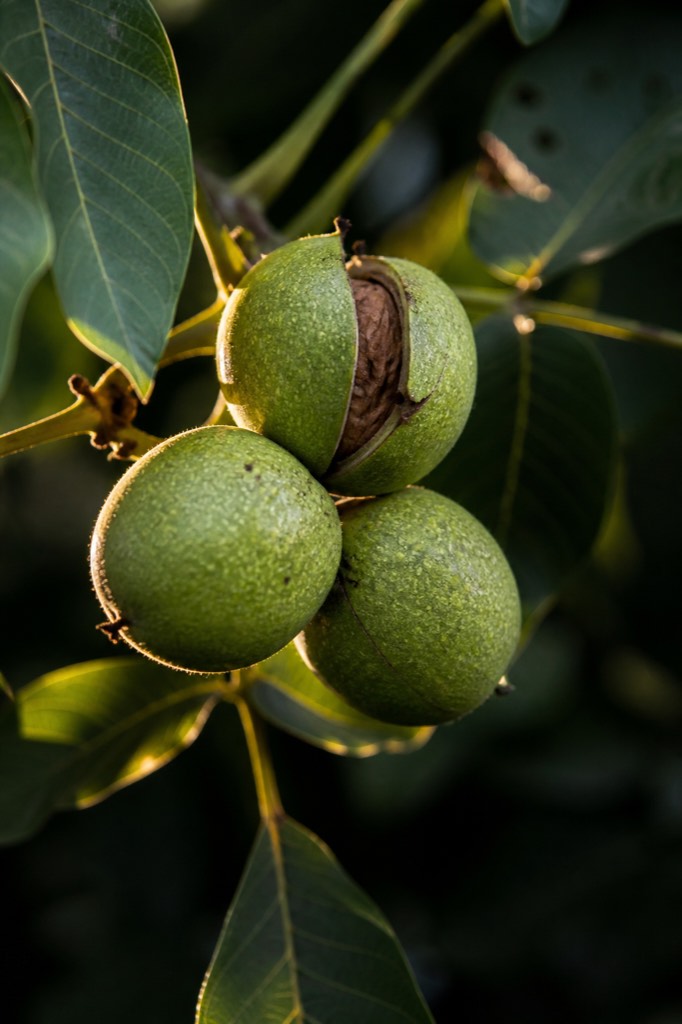
It waits out the last frost
The walnut comes into leaf late, often long after the other fruit trees. That is not sluggishness, it is insurance: a late frost on new growth costs the whole crop, and the tree has learned to wait.
Then it flowers without any display. No petals, no bees: the walnut is pollinated by wind. The male flowers hang in catkins, the females are tiny, and the two are not always ripe at the same moment on the same tree — which is why an orchard planted all at once has to mix its varieties, where a stand that came up over time sorts it out by itself.
The husk opens, and from that moment every hour works against the product.
Summer fills the shell
The shell forms first, empty. The kernel only fills afterwards, in high summer, and it is the heat and water of those particular weeks that settle the final weight. Too short a summer gives a light nut: the shell is there, the kernel is not. That is exactly what you hear when a walnut rattles.
Autumn, and the hours that count
At maturity the green husk splits and the nut falls. From that moment time works against the product: a husk left on the shell stains and ferments, a nut left damp goes mouldy. Hulling and drying decide the colour of the kernel, and they are settled in hours and days, not weeks.
Only then does the trading year begin. The new crop arrives in autumn, and last year's stock runs down while it settles in. A buyer who knows this calendar knows when to ask for a price, and when to wait.