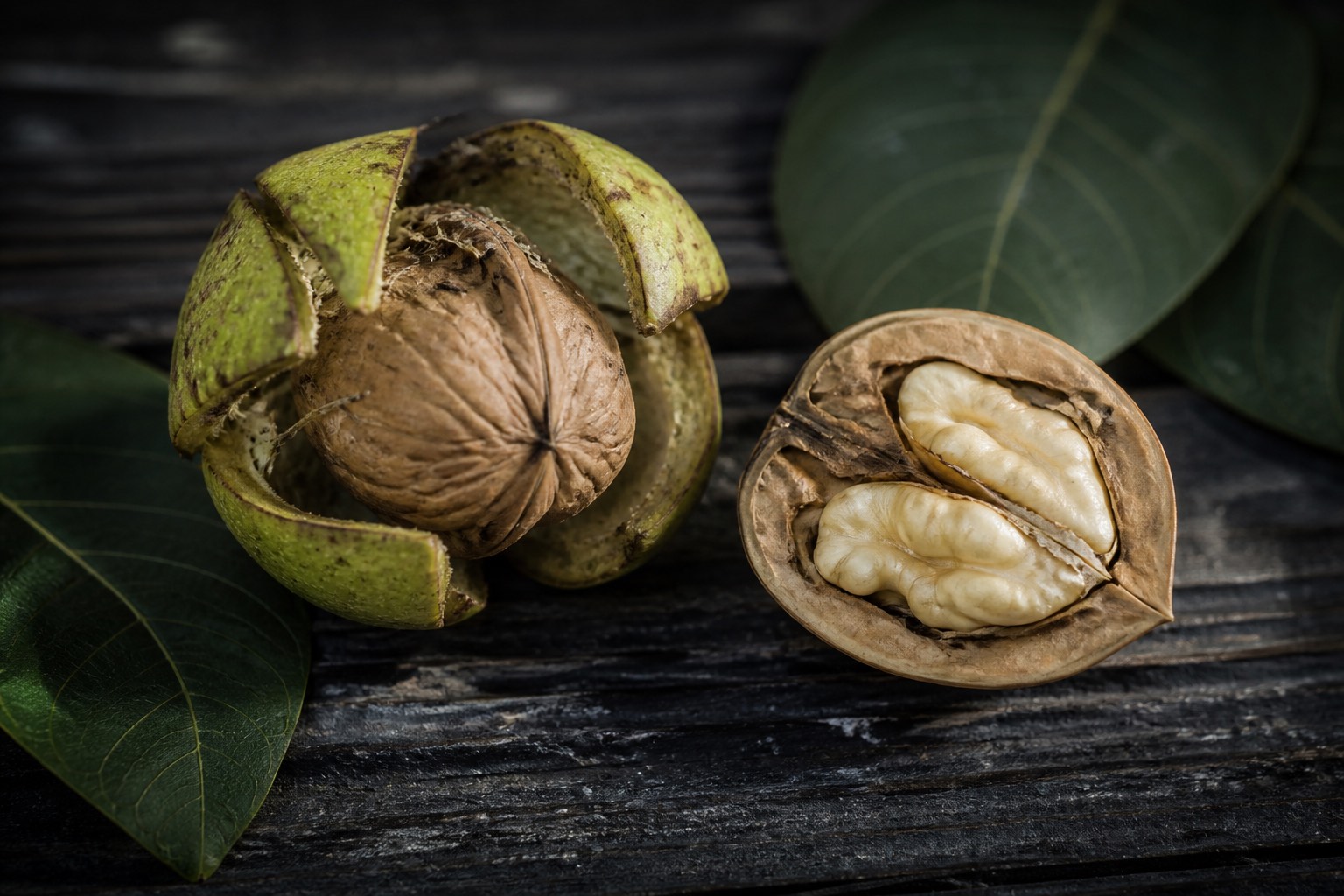
In shell: weight first, then sound
Take a walnut in your hand. It should feel heavy for its size: a light nut is one whose kernel never formed, or has dried out. Shake it next to your ear. If it rattles, the kernel has shrunk and pulled away from the shell.
Then look at the shell: clean, unsplit, with no black staining left by a husk that stayed on too long. Then stop looking at the nut and look at the lot. An even lot is obvious at a glance, and an uneven one is expensive for whoever has to sort it.
A supplier who answers "I don't know" to a precise question has already told you something useful.
In kernels: colour first, then smell
The colour of a kernel is a price. The paler it is, the more it is worth, because pale shows well in a finished product and dark hides badly in one. And colour is not only a matter of variety: a kernel darkens when it comes out of the shell late, is dried too hot, or is stored too long without cool.
Smell tells you the rest. A fresh kernel smells of milk and cut grass. A kernel going rancid smells of paint, cardboard, old cupboards — and there is no way back from it. Smell before you taste, taste before you order.
What you cannot see, ask for
The rest cannot be judged by eye and should be in writing. Ask for the origin, down to the country. Ask for the crop year. Ask for the moisture on delivery, the storage temperature, and how a lot can be traced back to where it started. Ask for test results: aflatoxin is the serious regulatory point on tree nuts in Europe.
Finally, ask which certifications the supplier holds, with numbers and validity dates. A supplier who answers "none" plainly is safer than one who answers beside the question.