Origin
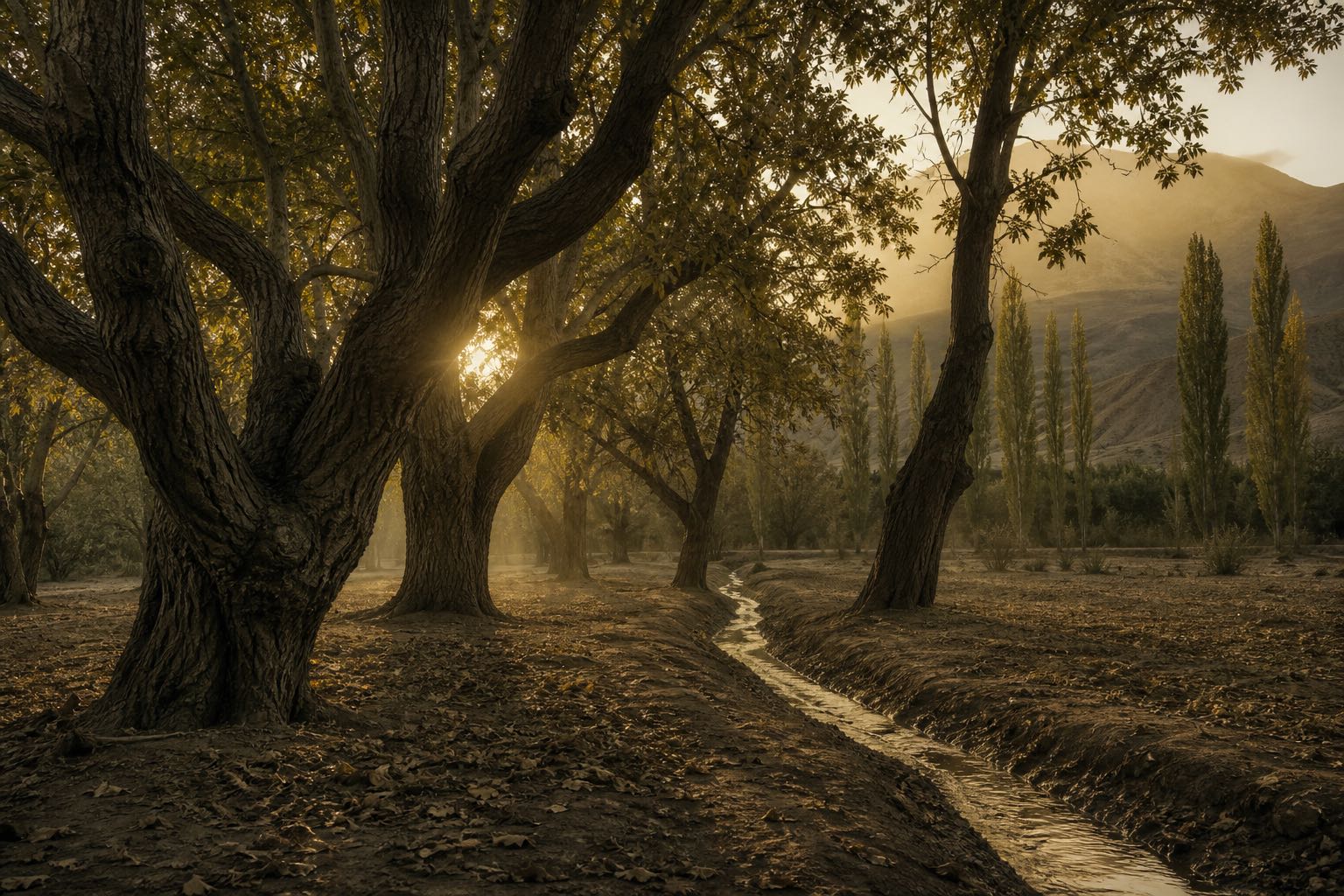
The walnut of Khotan does not grow on its own. It grows on a strip of irrigated ground held between a desert and a high mountain range — and it has been grown there for two thousand years.
The oasis
Between the desert and the mountains.
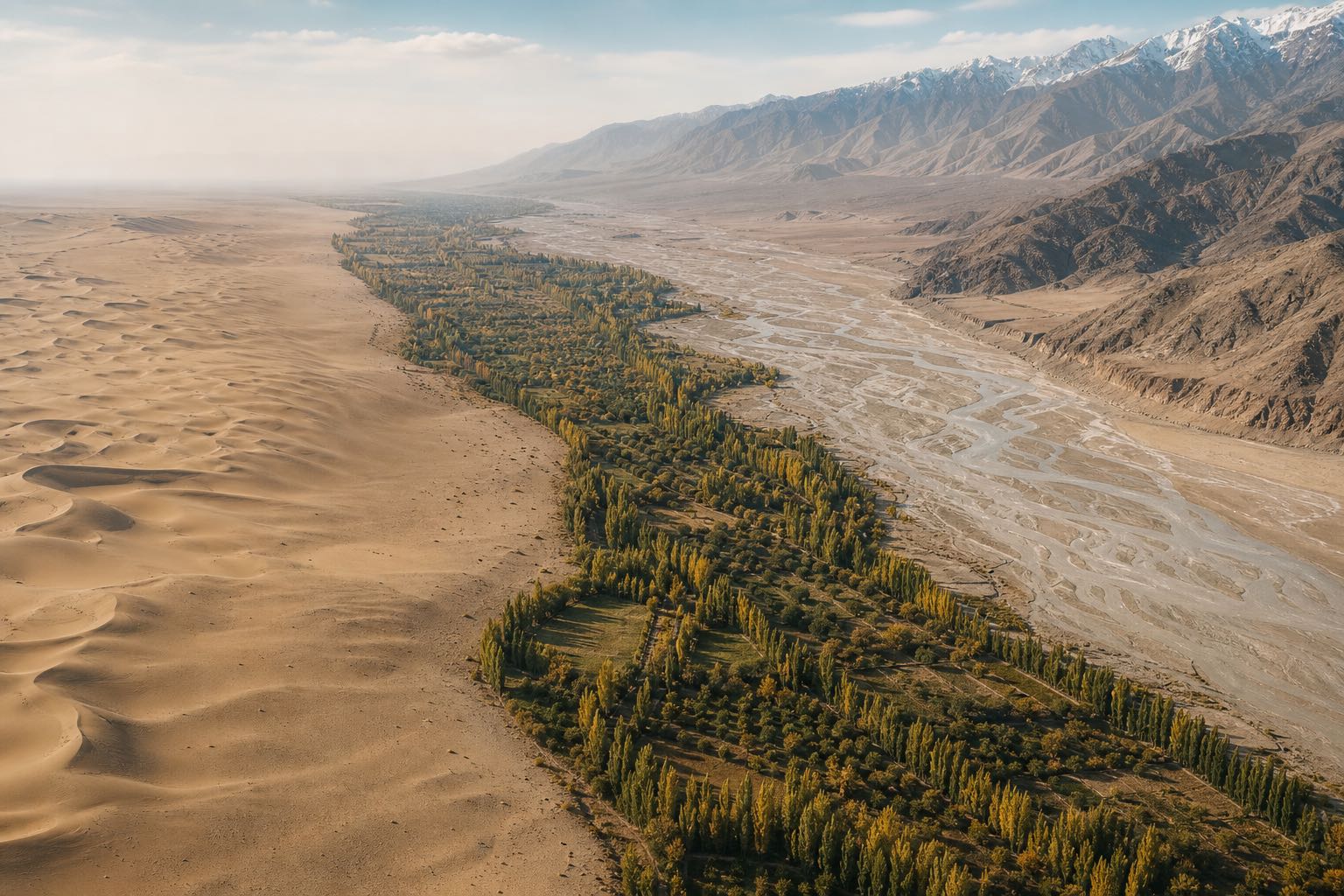
Khotan runs on water. The oasis lies along the foot of the Kunlun, on the southern rim of the Taklamakan, and lives off rivers born of melting snow: they come out of the mountains, cross the cultivated ground, and disappear into the sand. A few centimetres of rain fall here in a year. Without that water there is no tree; with it, there have been trees for two thousand years.
The climate
Exactly what the tree asks for.
The walnut is demanding: a winter cold enough to put it fully to sleep, a spring without a late frost, a hot dry summer to fill the kernel. Khotan gives it all of that — a sky that is nearly always clear, long summers, decisive winters. The one thing the climate does not supply is water: that comes down from the mountains through the channels, and bringing it to the foot of the tree is the work of the people who farm here.
Time
A tree that takes its time.
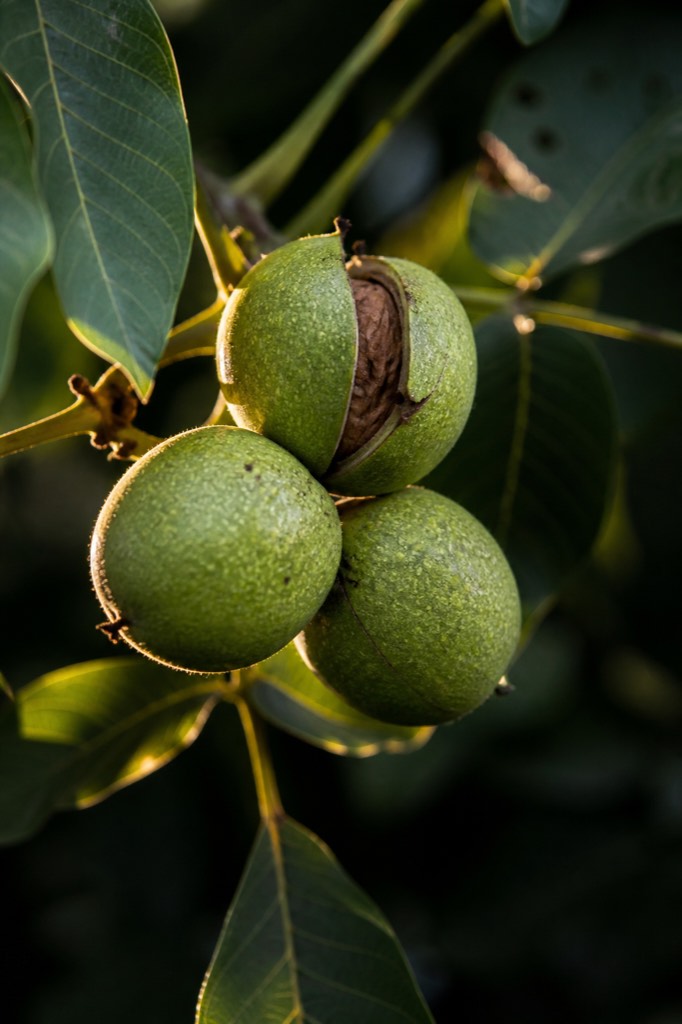
A walnut tree is planted for the next generation: it takes years to bear, and can then go on producing for centuries. That tree is what our name refers to — not our company, which is young, and whose registration date is public. The tree was here long before we were.
The journey
Then it became European.
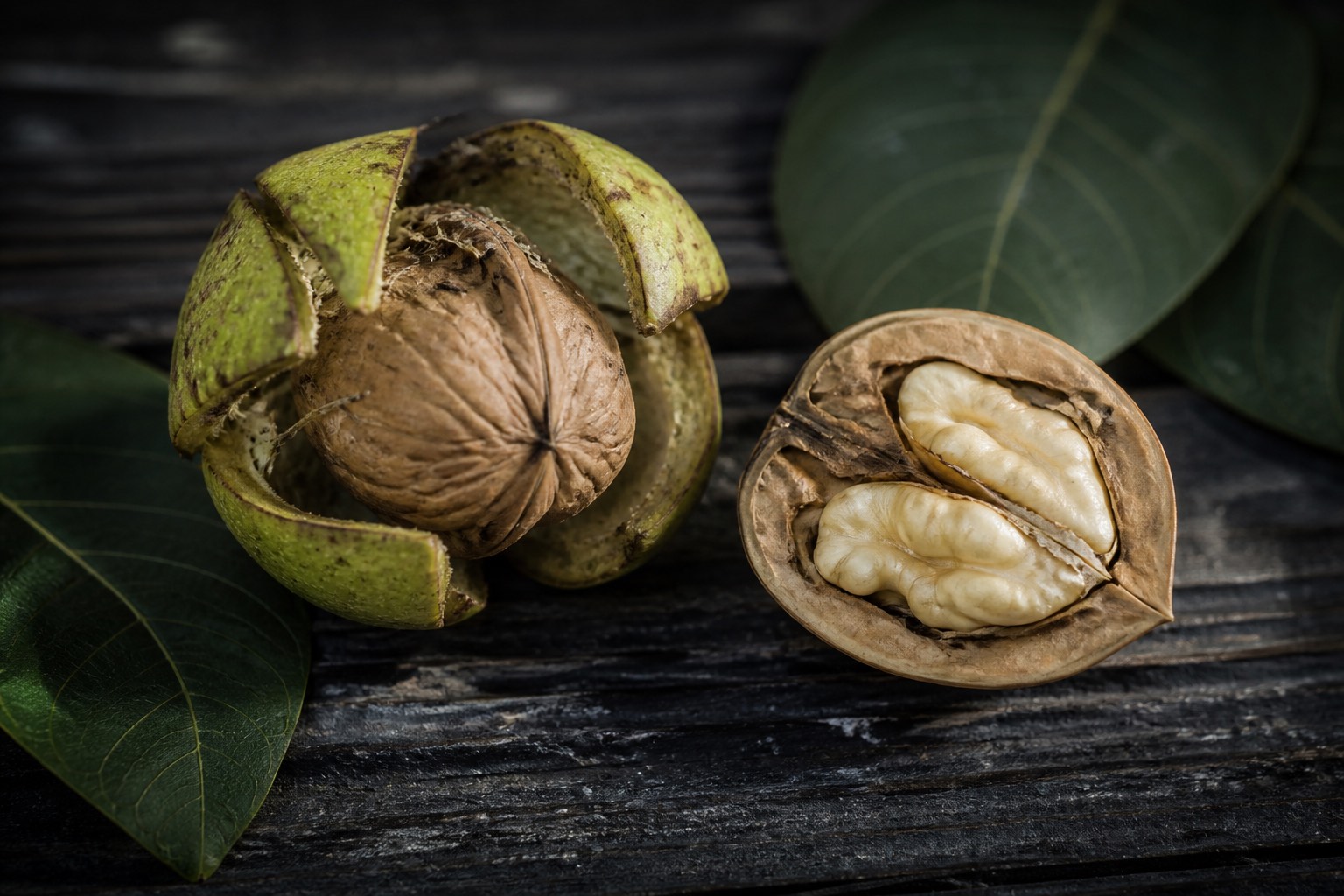
Khotan was a staging post on the roads that linked Asia to the Mediterranean. The walnut followed them to Persia, Greece and Rome, and from there into the orchards of Europe. Its Latin name means "Jupiter's acorn"; Russian calls it the "Greek nut"; English calls it the English walnut. None of those names says where it is from.
Today
From that oasis to Europe.
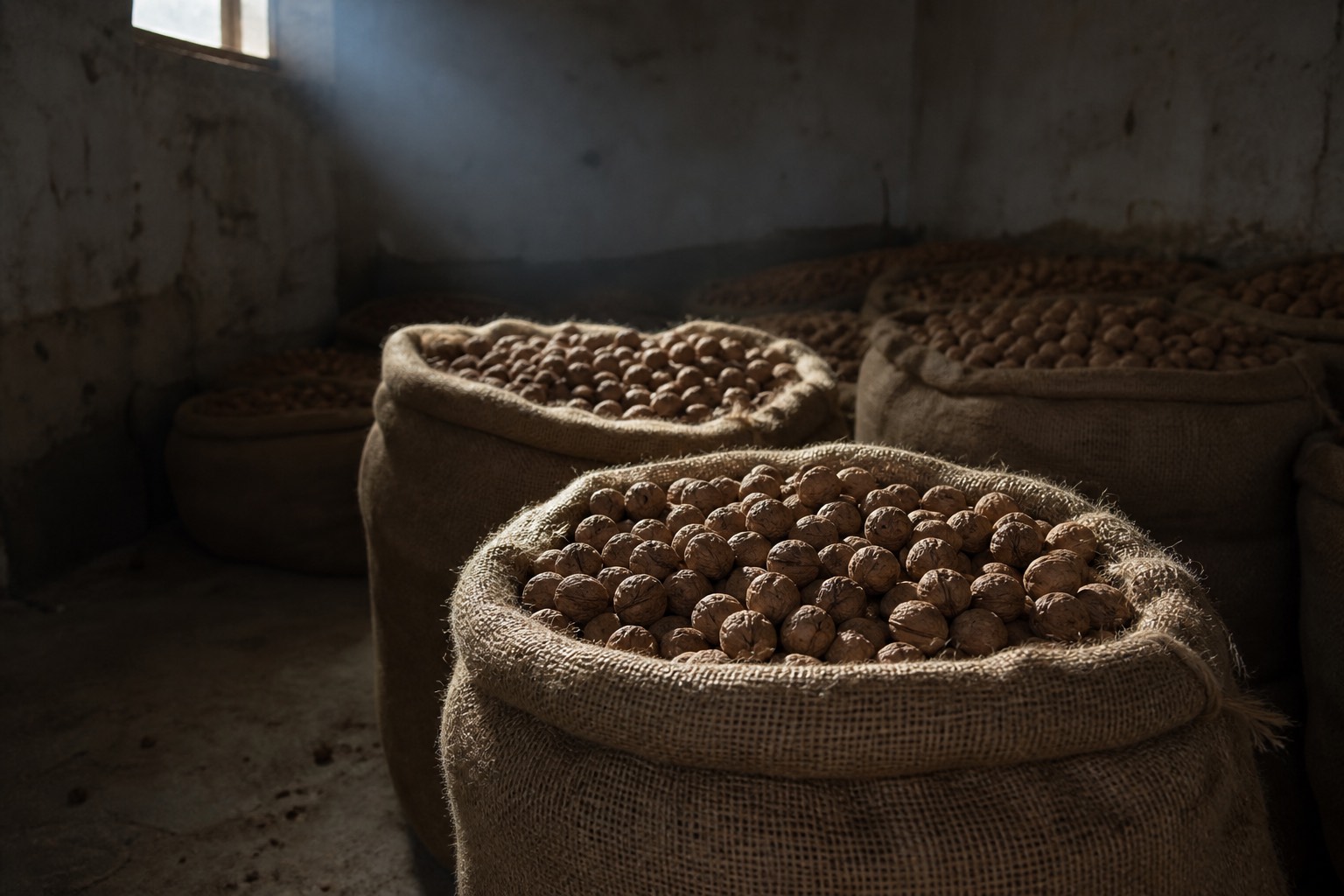
We buy in Khotan and deliver to European trade buyers. The crop year and the characteristics of the lot on offer come with every quotation: ask, and we answer in writing.